
"coffee root pests"
400 article(s) found

High-quality coffee the main uses of coffee grounds
Coffee grounds are the dregs left over from the extraction of coffee, isn't it? In fact, every 100 grams of coffee beans are rich in 12.6 grams of protein, 9 grams of cellulose, 4.2 grams of ash, 120 milligrams of calcium, 170 milligrams of phosphorus, 42 milligrams of iron, 3 milligrams of sodium, 0.12 grams of vitamin B2, 3.5 milligrams of niacin, 1.3 grams of caffeine and 8 grams of tannins. It can be said that the coffee grounds after extraction are nutritious and comprehensive.

A brief introduction to the description of flavor, taste and aroma characteristics of Java coffee
Java coffee is full-bodied and full-bodied, with clear, high-quality acidity, high balance, and sometimes nutty taste. In terms of appearance and quality, Java coffee is excellent, just like a woman's vaguely charming, charming and just right, memorable. Java has a mild climate, humid air and diverse climate that makes it a harvest season all year round.

Unique fragrant Java Coffee Variety characteristics of Grinding degree treatment in producing area
Each caffeine variety has a different origin and has its own strong character, such as the masculine Mantenin, which resembles the character of an iron and steel man; mellow, fragrant blue mountain coffee, and gentle women are addicted to missing. Java Coffee, which has always been light and fragrant, is suitable for those who like light sex. Such people do not want to drink coffee as a serious thing, from sour and sweet
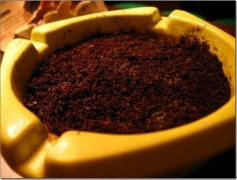
A detailed explanation of the use of Coffee grounds
Coffee grounds are the dregs left over from the extraction of coffee, isn't it? In fact, every 100 grams of coffee beans are rich in 12.6 grams of protein, 9 grams of cellulose, 4.2 grams of ash, 120 milligrams of calcium, 170 milligrams of phosphorus, 42 milligrams of iron, 3 milligrams of sodium, 0.12 grams of vitamin B2, 3.5 milligrams of niacin, 1.3 grams of caffeine and 8 grams of tannins. It can be said that the coffee grounds after extraction are nutritious and comprehensive.
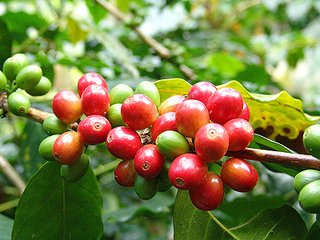
Coffee cultivation and cultivation Coffee cultivation techniques and techniques Introduction to the process of coffee green beans cultivation
(a) seedling propagation coffee seedling propagation can be divided into seed propagation and asexual propagation. 1. Seed propagation (1) Seed collection, seed washing and seed storage In the mature period of coffee (the mature period of medium seed coffee in Hainan Island is 2~3 months, and the mature period of small seed coffee is 9~11 months), fully mature fruits are picked from healthy and high-yield mother trees to make seeds. After the fruits are picked, peeling and seed washing are carried out immediately.

The main use of coffee grounds can be deodorization, deodorization and cosmetology.
Coffee grounds are the dregs left over from the extraction of coffee, isn't it? In fact, every 100 grams of coffee beans are rich in 12.6 grams of protein, 9 grams of cellulose, 4.2 grams of ash, 120 milligrams of calcium, 170 milligrams of phosphorus, 42 milligrams of iron, 3 milligrams of sodium, 0.12 grams of vitamin B2, 3.5 milligrams of niacin, 1.3 grams of caffeine and 8 grams of tannins. It can be said that the coffee grounds after extraction are nutritious and comprehensive.

From selling raw materials to making a brand Pu'er Man Laojiang Coffee wants to make a hit in the international market
Latitude 22 degrees north is the golden zone for growing coffee in the world, and Pu'er is no exception. Up to now, there are nearly 400 coffee enterprises in Pu'er, but not many enterprises carry out intensive processing. Yunnan Pu'er Manlaojiang Agricultural Development Co., Ltd. (hereinafter referred to as Manlaojiang Company), which is rooted in the land of Pu'er, has also seen the prospect of refined and deeply processed coffee, and now their goal is to make coffee from.

Cultivation techniques of Coffee Tree Seedling Propagation and Establishment of Coffee Garden
(1) Seedling propagation Coffee seedling propagation can be divided into seed propagation and asexual reproduction. 1. Seed propagation (1) seed collection, seed washing and seed storage during the full ripening period of coffee (the full ripening period of medium-grain coffee in Hainan Island is from February to March, and that of small seed is from September to November). The fully ripe fruits are picked from strong and high-yielding mother trees to make seeds. After the fruit is harvested, peel and wash the seeds immediately. The method is to remove the fruit.
Cultivation and cultivation of High-quality Coffee
(1) Seedling propagation Coffee seedling propagation can be divided into seed propagation and asexual reproduction. 1. Seed propagation (1) seed collection, seed washing and seed storage during the full ripening period of coffee (the full ripening period of medium-grain coffee in Hainan Island is from February to March, and that of small seed is from September to November). The fully ripe fruits are picked from strong and high-yielding mother trees to make seeds. Immediately after the fruit is harvested, peel and wash the seeds. The method is to place the fruit.

Is it true that coffee is not bitter and drinks "sweet"? Coffee and strawberry and pineapple?
Professional coffee knowledge exchange More coffee bean information Please pay attention to coffee workshop (Weixin Official Accounts cafe_style)"coffee = bitter" This concept has been deeply rooted in most people's impression, but in fact coffee is indeed natural sweet, in the cup tester's evaluation table,"sweetness" is one of the evaluation measures, let's talk about the natural sweet coffee bar! that

Flavor description of Yunnan Katim Coffee Bean
Coffee is a long-term economic crop, woodland reclamation must be long-term planning, good planning, before reclamation must do a good job of road, shed, fertilizer pool design. When the woodland is reclaimed, shade trees should be selected so that the coffee woodland after planting has 3040% shade, and then adjusted to 2030%. The planning and reclamation of horizontal terraces must be done well in the planning and design, which is the primary work of soil and water conservation.
Medium coffee robusta coffee
Medium-grain coffee (Hainan Flora) Coffea canephora Pierre ex Froehn. In Notizbl. Bot. Gart. Berlin 1: 237. 1897 et in Engl. Bot. Jahrb. 25: 269. 1898; A. Cheval. Op. Cit. 186; A. E. Haarer, op. Cit. 17; Flora of Hainan 3: 349, figure 765. 1974; Atlas of higher plants in China 4:
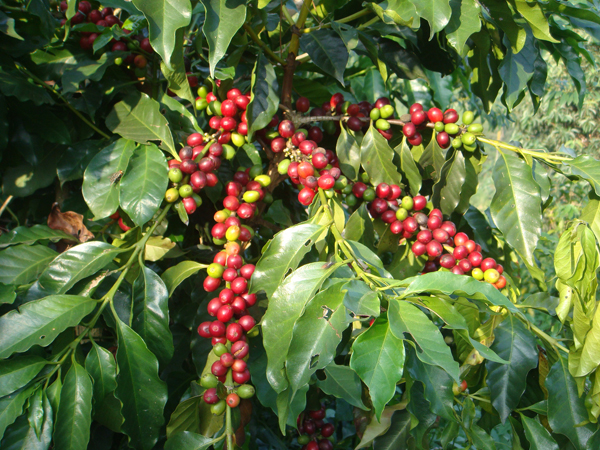
Explain the planting and cultivation of coffee trees in detail to understand the growth environment and needs of coffee trees.
(1) Seedling propagation Coffee seedling propagation can be divided into seed propagation and asexual reproduction. 1. Seed propagation (1) seed collection, seed washing and seed storage during the full ripening period of coffee (the full ripening period of medium-grain coffee in Hainan Island is from February to March, and that of small seed is from September to November). The fully ripe fruits are picked from strong and high-yielding mother trees to make seeds. Immediately after the fruit is harvested, peel and wash the seeds. The method is to place the fruit.

The variety of coffee or the price of coffee which kind of coffee is more affordable
The two main varieties of coffee are Arabica coffee (Coffea arabica) and Roberta coffee (Coffea robustra), also known as stout coffee. In 1753 Linnaeus determined the taxonomic position of Arabica coffee (Coffea arabica), which produced Arabica coffee beans, which can be called high-quality coffee all over the world.

A brief introduction to the cultivation of high-yield high-quality coffee beans in Yunnan, geographical location, climate and altitude
However, it does not mean that you have not had a cup of good Yunnan coffee, and if the post-processing and baking is good, as a friend said here, the coffee from several hills, such as Pu'er Manlaojiang, Kaddura of Manzhong Tian, Tielka of Baihualing of Lujiang, Baoshan, and Bourbon of Lujiang, Baoshan, is still good, especially resistant. The old varieties of Yunnan coffee at 1800m above sea level are currently supplied to the domestic market by 30%, 70%.
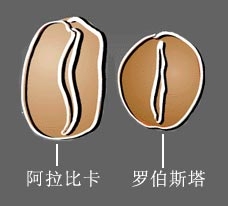
How can Robusta beans tell? Robusta's skill in selecting standard and distinguishing Robbstadt beans
The picture compares the shape difference between Arabica and Robusta coffee beans. The appearance of Arabica coffee beans is quite obvious compared with that of Robusta coffee beans. Arabica coffee is long, flat, complete and greenish; robusta coffee is round, thicker and whiter. Busta's coffee tree is between a shrub and a tall tree.

Katim Coffee Flavor Flavor Description Grind Scale Treatment Variety Origin Introduction
Arabica and Robusta are coffee tree species, the former growing at high altitudes, the latter growing at low altitudes, the two in the use of very different, there are few occasions to compare Hainan and Yunnan are the difference in origin, affected by the local water and soil climate, taste and flavor will be slightly different.

A brief introduction to the cultivation of boutique coffee beans in West Java, Indonesia, geographical location, climate and altitude
Java coffee is full-bodied and full-bodied, with clear, high-quality acidity, high balance, and sometimes nutty taste. In terms of appearance and quality, Java coffee is excellent, just like a woman's vaguely charming, charming and just right, memorable. Each caffeine variety is of different origin and has its own strong personality, such as masculine
"King of Beverage of the World"-- Coffee planting in Zhanjiang
Coffee is a worldwide drink, known as "the king of beverages in the world". The southern part of Leizhou Peninsula in Zhanjiang has excellent volcanic rock soil and good light and thermal conditions for growing coffee, which is very suitable for the development of coffee cultivation. Leizhou Peninsula is also the earliest coffee growing area in our province. In recent years, the coffee industry of Chinese mainland has become a new hot spot for Taiwanese investment. Before coffee was planted in Leizhou Peninsula,

Characteristics of three major coffee varieties Arabica, Robusta and Liberka Arabica coffee beans
Professional coffee knowledge exchange more coffee bean information please follow the coffee workshop (Wechat official account cafe_style) Arabica world three big coffee products compared to a brief table: one. Types of coffee: coffee beans can be roughly divided into three categories: (1) Arabica coffee tree, (2) Robusta coffee tree and (3).